
RESPONSIVE, RELIABLE, RESULTS
Alcohol Testing
Cellmark has transferred its drug and alcohol testing service to our partners at Lextox. Also part of the Eurofins Scientific Group, Lextox specialises in accredited hair strand drug testing and alcohol testing.
Our move to Lextox is all about elevating your experience - streamlining processes to provide a faster, smoother and reliable service for our clients.
What you can expect from Lextox . . .
-
Hassle-free fully managed alcohol testing service from quote to results
-
Dedicated client manager - ensuring consistent support and a single point of contact
-
Rapid turnaround times
-
Pricing in accordance with LAA codified rates.

How do I arrange testing?
- You can request an alcohol testing quote by completing an online form or calling the team on 029 2048 4141 (Monday to Friday 9.00am to 5.00pm).
- Once you've registered your testing requirements, a dedicated client manager will arrange your sampling appointment.
- After sampling, the sample(s) and paperwork will then be sent to the laboratory for analysis.
- Testing will begin as soon as your samples are received at our laboratory.
- Once testing is complete, a report will be issued by Lextox’s team of laboratory experts.
An accredited hair drug testing and alcohol testing service that is simple to understand, easy to organise and delivers comprehensive results.
What are my alcohol testing options?
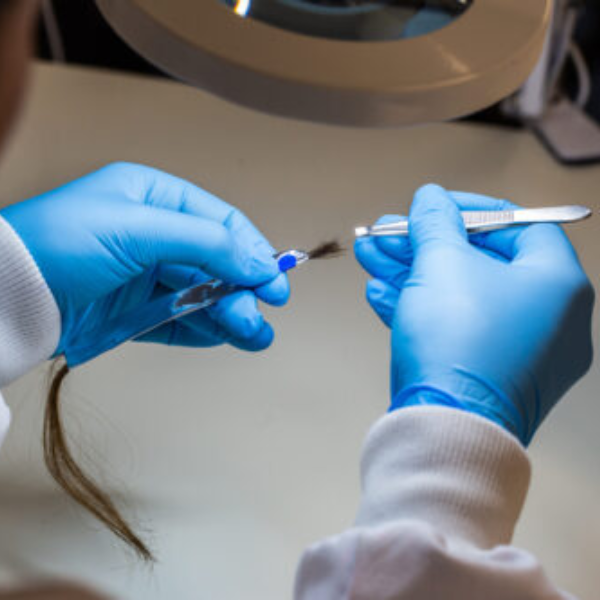
Our hair strand alcohol testing detects two biomarkers as standard: ethyl palmitate (EtPa) and ethyl glucuronide (EtG). These substances are metabolic by-products produced by the body in the presence of alcohol and are used to assess patterns of chronic excessive alcohol consumption.
We strongly recommend that EtPa and EtG hair analysis is used alongside other evidence, such as phosphatidylethanol (PEth) testing, carbohydrate‑deficient transferrin (CDT) blood testing, clinical assessments, and a documented history of alcohol use.
Combining these measures provides a more comprehensive and reliable assessment of alcohol consumption.
YOUR QUESTIONS ANSWERED
Further Alcohol Testing Information
The Society of Hair Testing states that the direct determination of ethanol itself in hair is not possible due to its volatility and its potential absorption from external sources. Instead, the minor ethanol metabolites, ethyl glucuronide (EtG) and/or fatty acid ethyl esters (FAEEs) can be measured in hair as direct markers of alcohol consumption.
The concentration of EtG and FAEEs in hair can be influenced by cosmetic treatments including bleaching, perming and thermal straightening products. It is recommended that any cosmetic hair treatment undertaken should be considered during the analysis. Whilst EtG seems not to be affected by a wide range of hair care products their use can lead to a false positive for FAEEs. One reason why our standard recommended test covers both hair and blood sample testing.
Phosphatidylethanol (PEth) is a specific and reliable alcohol biomarker for the detection of recent alcohol consumption in family law cases.
PEth requires ethanol for its production and is formed on the surface of red blood cells when the alcohol reacts with phosphatidylcholine (a substance found in the cell membrane). PEth accumulates as more alcohol is consumed and this makes it possible to provide an indication of whether or not alcohol use has been occasional, moderate or excessive in the previous 4 weeks.
Test results are measured in ug/l. Over 210 ug/l is generally recognised as indicating excessive alcohol consumption in the past month, with 35-210 ug/l representing moderate alcohol consumption.
PEth testing, in combination with hair testing, can provide a good understanding of someone’s alcohol consumption.
Transferrin is a protein present in blood that transports iron around the body and it can also be used to indicate chronic alcohol consumption. In normal subjects transferrin in the blood has between 3-5 carbohydrate sidechains attached to it. When excess alcohol is consumed the attachment of carbohydrate sidechains is reduced to between 0-2. This has become known as carbohydrate deficient transferrin (CDT).
Transferrin remains in the blood circulation for 7 to 14 days and the CDT test can therefore give an indication of excessive alcohol consumption over the previous couple of weeks before the blood sample was taken. A reading of greater than 1.6% in the test indicates possible excessive alcohol consumption during the weeks preceding the test.
Alcohol misuse is the most common reason for elevated CDT levels however elevated levels may also be caused by cirrhosis and other related liver conditions. People with these conditions would also show corresponding anomalies in the liver function (LF) test results. Performing both tests together is therefore important. In addition to our testing we would also always recommend that you seek a clinical assessment by a medical professional.
Liver Function (LF) testing looks at a range of markers within the blood to check how the liver is performing; these are gamma-GT (GGT), alanine aminotransferase (ALT) and aspartate aminotransferase (AST). Excessive consumption of alcohol will affect liver function and produce raised levels of these markers.
Alanine transaminase (ALT) is an enzyme that helps to process proteins. Large amounts of ALT occur in liver cells and if the liver is injured or inflamed the blood level of ALT usually rises.
Aspartate aminotransferase (AST) is another enzyme usually found inside liver cells. High levels of this enzyme in the blood usually mean the liver is injured in some way. However as AST can also be released if heart or skeletal muscle is damaged ALT is usually considered to be more specifically related to liver problems.
Gamma-glutamyl transferase (GGT or 'gamma GT'). A high level of this enzyme is particularly associated with heavy alcohol drinking however there can be other explanations including liver disease and as such it should not be considered in isolation.
Useful Links
From ensuring that you have the right information before commencing the testing process to understanding what the final test report means - we aim to provide assistance every step of the way.
Court guidance
Society of Hair Testing
Alcohol and the law
You can also pay for advice from a local legal advisor or solicitor – a number of firms have responded to the legal aid changes by offering fixed price services.