
COURT APPROVED AND ACCREDITED
DNA, Drug and Alcohol Testing
Cellmark provides court approved DNA testing and forensic quality hair drug and alcohol testing services to members of the public, local authority children's services teams, government departments and the legal profession.

>35 years
Established in 1987, Cellmark is the UK’s most experienced DNA testing service and was the world’s first private DNA fingerprinting company.
500+
With a rich history of innovation and a collective drive to be the best at what we do. Our 500+ staff members are at the heart of our business.
1000s
We work with the general public, local authorities, 80% of UK police forces plus national and international government agencies.
5m+
Approaching 3 million human DNA samples and over 2.5 million animal samples DNA tested at our laboratories in the UK.
COMPREHENSIVE, CONCLUSIVE, CONFIDENTIAL
Our Laboratory Testing Services
Cellmark was the world's first commercial DNA testing laboratory and today is one of the most trusted forward thinking DNA analysis companies in Europe. Click an image below to find out more about our services:

Legal DNA Testing
Confidential, conclusive and court approved 'Next Day' DNA testing to establish paternity and other relationships.

Immigration Testing
DNA tests for individuals seeking UK Visas. Accepted by UK Visas and Immigration and immigration departments around the globe.

Hair Drug Testing
Our accredited hair drug testing service provides rapid, reliable scientific analysis, clearly reported and simply explained.
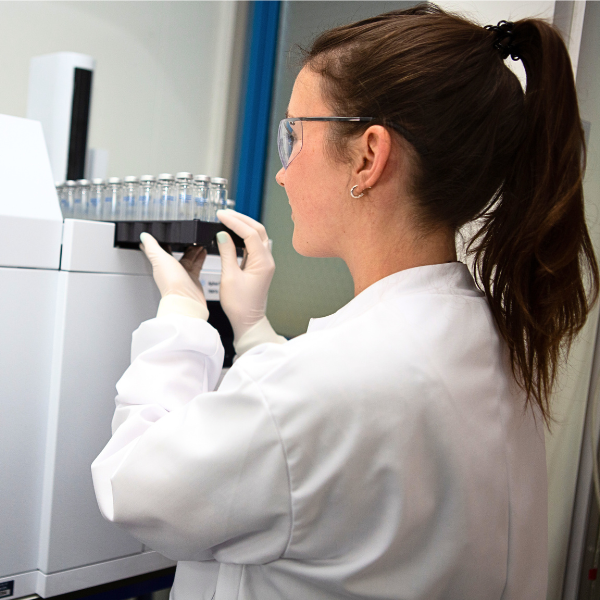
Alcohol Testing
Our alcohol testing service tests for evidence of chronic excessive alcohol consumption in hair, blood and urine samples.

FREE CONFIDENTIAL ADVICE
Call Us Today
We're here to provide help and assistance - call our friendly customer services team to discuss your DNA Relationship, Drug and Alcohol testing requirements.
Monday 8.30am-7.00pm and Tuesday-Friday 8.30am-6.00pm
Our extended opening hours ensure you are able to speak to someone at Cellmark when it's convenient for you - 96% of our calls answered within 15 seconds.
CARE, ACCURACY AND PRECISION
Why Choose Cellmark?
Cellmark is the UK's most experienced DNA testing company, since 1987 we have conducted hundreds of thousands of tests. Cellmark's skilled staff and our strict, accredited, laboratory processes ensure that your testing is handled confidentially and carefully to produce rapid, reliable results.

Nationwide Sampling Service
We provide a professional and reliable DNA sampling and hair sampling service at a location most convenient for you.

Instant Online Quotes
You can obtain a hair drug & alcohol or DNA testing quote and register your case instantly online - it's quick, easy and secure.

Competitive Pricing
We keep our prices low without compromising on accuracy or quality. You can rest assured - your testing is in good hands.

RAPID, RELIABLE TESTING
Next Day DNA Results
Cellmark provides a fast court approved service without compromising accuracy and quality. Register your DNA relationship testing requirements by phone or online and we'll send sample collection kits to your chosen independent sampler. On return of all the DNA test kits we immediately begin testing and will issue your test results report the next working day* - at no extra cost.
* Over 90% of our DNA testing reports are issued the next working day
QUALITY ASSURED
Court Approved and Accredited
As a member of the Ministry of Justice's list of accredited bodies, Cellmark is accredited to carry out parentage tests directed by the civil courts in England and Wales under section 20 of the Family Law Reform Act 1969. Our laboratory in Abingdon, Oxfordshire is accredited to ISO 17025 and certified to ISO 9001, ISO 14001 and ISO 27001 international quality standards.

QUICK, RELIABLE, TRUSTED
Relationship DNA Tests
Cellmark pioneered the introduction of DNA analysis for paternity testing. We deliver a next day service using the most conclusive 24 marker genetic test across our range of DNA relationship testing services. This includes DNA testing for Maternity, Sibling, Avuncular, Grandparentage and Immigration matters as well.
DNA Paternity testing offers a scientific means of establishing whether a man is or is not the biological father of a child.
Maternity DNA tests are sometimes used by people who have been adopted to confirm their birth mother.
A sibling test can be used to identify whether two, or more, children share the same biological parents.
A DNA test can also be used to test twins to quickly determine whether they are identical (monozygotic) or non-identical (dizygotic).
Grandparentage testing can establish family relationships even when the parents cannot be tested.
Aunt/Uncle (Avuncular) testing can be used to confirm a relationship between a niece/nephew and an aunt/uncle
FORENSIC QUALITY ANALYSIS
Drug and Alcohol Tests
We apply the same high level of scientific expertise and customer service to our hair drug testing and alcohol testing to provide the complete package of analytical services for our customers.
A non-invasive method of providing evidence of an individual's history of drug use. We test for 29 common 'drugs of abuse' and drug metabolites.
We analyse for chronic alcohol consumption by testing for the breakdown products of alcohol incorporated into hair, specifically EtG and FAEEs.
Blood testing allows us to analyse levels of Carbohydrate deficient transferrin (CDT) and provide Liver Function Testing (LFT).
A urine test detects levels of EtG and EtS.
TAILORED TESTING SERVICES
Our Customers
Cellmark provides tailored testing services to meet the specific requirements of our family law and private customers. Find out more about how we can help you by clicking an image below:

Solicitors and Barristers
Cellmark is the company of choice for many of the UK's leading legal practitioners for court approved testing.

Local Authorities
We provide local authority solicitors and social workers with the complete package of analytical testing services.

Private Individuals
We’ve provided testing services for over 600,000 people - our customer services team will assist you every step of the way.

Healthcare Professionals
Cellmark is the considered choice for healthcare professionals whose patients are looking into DNA testing.
TRUSTED AND RECOMMENDED
What our customers are saying . . .
I would like to thank you and the Cellmark team for the first class customer service you gave me, the timely responses and the efficiency. My first time using Cellmark but I will definitely recommend to everyone. Your service can't go unnoticed and I hope your managers recognise that
LOCAL AUTHORITY
I wanted to thank you so much for your help with this case. You really made this happen and we had the hearing today. Things will now be sorted out so much more quickly for this baby because of your efforts.
LOCAL AUTHORITY CHILDCARE TEAM
I’ve had the pleasure of speaking to one of your agents using your freephone number. I would just like to say a massive thank you. Your customer services advisor has gone above and beyond her duties in my opinion -with her help and dedication I am able to put the stress and worries behind me.
PRIVATE INDIVIDUAL
Firstly I would like to say thank you to all of you for a great service. Just last night I received my DNA reports well with in my deadline period. Secondly the reason why I chose Cellmark out of 4-5 DNA companies from the list given was due to the fact that Cellmark responded to all my inquiries efficiently, professionally and promptly.
UNSOLICITED TESTIMONIAL
THE UK'S MOST EXPERIENCED DNA TESTING SERVICE
Service Excellence Through Science
Cellmark is a leading provider of a wide range of DNA and related forensic services. With high sensitivity DNA analysis at the core of our business, we continue to develop new services which capitalise on our specialist technical expertise, our drive for innovation and our proven history of reliable service delivery.

Home DNA Testing
The quality you would expect from the UK's most experienced paternity tester with the convenience of sampling in your own home.

Forensic Services
Cellmark provides high quality, specialist forensic science services to support the investigation of a wide range of offences.

DNA Protected
DNA Protected has been developed to deter thieves, provide dog owners with peace of mind and to help collar the criminals.

eDNA Testing
Cellmark's eDNA testing services provides a rapid and effective way to test for the presence or absence of great crested newts.